 Call: (806) 831-5431


- West Texas
Concrete work from Lubbock to Amarillo and across West Texas.
- Free Estimates
No deposits required. Tell us about your job: call or text (806) 831-5431.
 West Texas
 Free Estimates
Slab Foundations in Lubbock, TX
A house starts with the slab under it. We pour slab foundations for new houses and additions across "Lubbock and the surrounding areas", as we put it, from the first stakes in the dirt to the last pass of the trowel. David Perez runs Perez Concrete and Repairs, in business since 2022, and slab foundations come first on the list of work we take on.
What a Slab Foundation Is
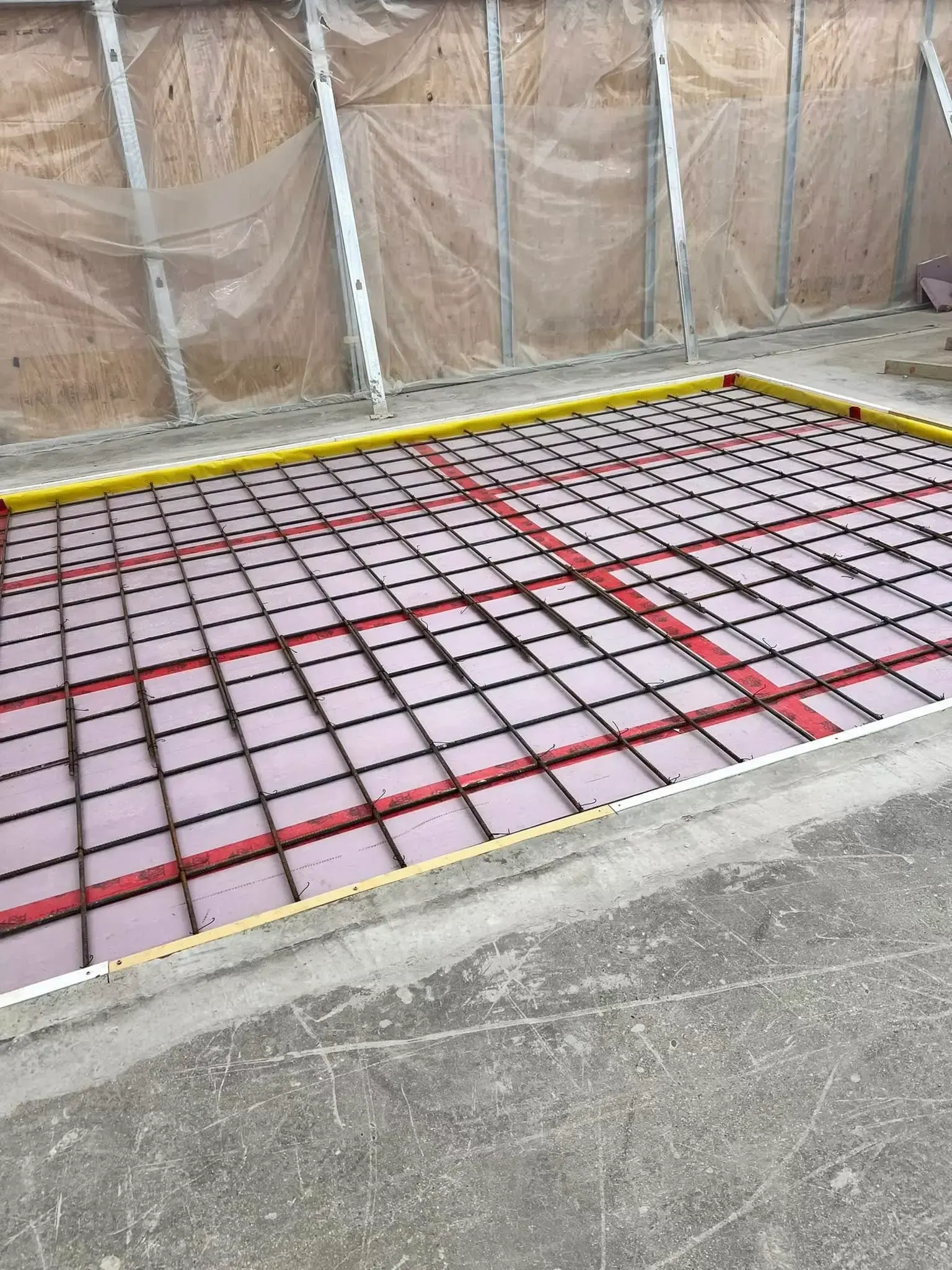
A slab foundation, also called a slab on grade, is one pour of concrete laid right on the prepared ground. The floor of the house and its foundation are the same piece: there is no crawl space and no basement under it.
Around the outside edge runs a perimeter beam, a deeper band of concrete dug down into the ground. Interior grade beams cross under the slab where the house plans put them. Rebar ties the beams and the flat part of the slab together, so the whole thing works as one piece.
That is how a slab foundation works. The beams carry the weight of the walls and the roof down into the ground, the slab spreads the rest out evenly over the base, and the steel holds it together when the ground under it moves.
What Goes Into a Slab Foundation
The foundation sheet in your house plans, from your builder, designer or engineer, sets the layout, the beams and the steel of the slab. We pour to those plans. From there the work runs in steps:
- Layout: we stake out the corners and lines from the plans on your lot.
- Pad and base: the pad is built up and the base compacted, so the slab sits on firm, even ground.
- Forms and beams: form boards are set to grade around the edge and held with stakes, and the perimeter and interior grade beams are dug in where the plans show them.
- Plumbing rough-in: your plumber sets the drain and water lines in the pad before anything is poured.
- Vapor barrier and steel: a vapor barrier goes down over the pad, and the rebar is tied and set on chairs so it sits inside the concrete, not on the ground.
Every house slab we pour runs through these steps; one recent job of ours was a slab foundation 22 by 25 feet. Texas has underground lines marked before digging, through 811, and that is one of the things we go over with you before the beams are dug.
Pour Day and Finishing the Slab
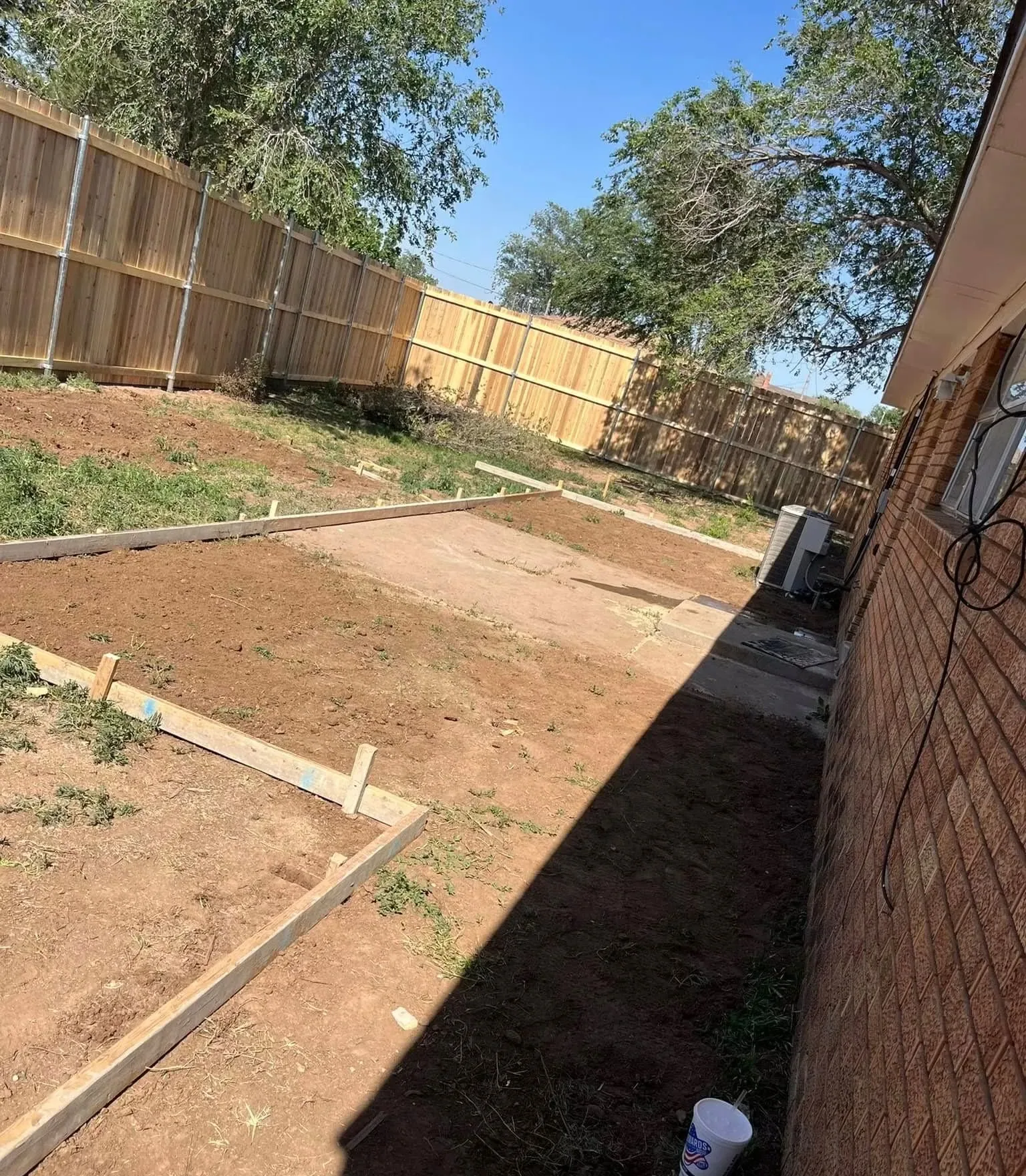
On pour day the ready-mix truck backs up to the forms and the concrete goes in. Where a truck can't reach every corner of the slab, a pump truck carries the concrete across the lot. The yards of concrete a slab takes are worked out from the plans ahead of time, so the trucks keep coming until the forms are full.
Then the finishing starts. We screed the concrete flat to the form boards, smooth it with a bull float, run an edger along the sides and bring the surface up with a power trowel to a hard, smooth floor. The trowel work is its own skill, and our concrete finishing page covers it in more detail.
After that comes curing. The slab is kept from drying out too early so it gains its strength the way it should. How long it needs before your builder starts framing depends on the weather and the mix, and we tell you on the day.
Why the Ground Matters on the South Plains
A lot of the ground on the South Plains is clay, and clay moves with water: it swells when it gets wet and shrinks as it dries out. A slab on that ground has to ride out the movement. That is why the pad, the compacted base and the beams count as much as the concrete itself.
Some lots also have caliche, a hard layer that can turn up when the beams are dug. Other things only show once the ground is open, like a soft spot or wet ground where the plans call for a beam. If what we find changes the job, we tell you before we go on.
Concrete can crack, on any ground. The base carries the load evenly, the rebar holds the slab together, and a good finish closes the surface. Water draining away from the house helps keep the clay under it from swelling and shrinking more than it has to.
What to Decide Before We Start
A little planning before the estimate saves changes once the ground is open:
- The plans: the house plans with the foundation layout and the beam details.
- The lot: cleared and reachable, with room for a ready-mix truck to get close to the forms.
- The plumber: who sets the rough-in, and when, so it is in place before the pour.
- The pour date: set with your builder, so the framing can follow.
- The driveway: a concrete driveway can be poured with the house while the trucks are already coming out.
Building a barndo instead of a framed house? That slab has its own page: barndominium foundations. A barn, shop or metal-building slab with no living space is one of our concrete slabs.
Slab Foundation Cost in Lubbock
The cost of a slab foundation comes from the job itself: the size and shape of the house, the beams the plans call for, the ground and the base it needs, how close the trucks can get, and the steel. So the number for your house slab comes at the free estimate, after we have walked the lot and read the foundation sheet.
Starting is simple. Send photos of the cleared lot and the foundation sheet of your house plans through the contact form, or call or text (806) 831-5431. We set up a free estimate, walk the lot with you, go over the plans and the pour date, and no deposit is required.
Ready to Pour Your Slab?
Call (806) 831-5431 for a free estimate.
Questions We Hear a Lot

-
There is no crawl space under a slab, so the plumbing lines in the pad are hard to reach once the concrete is poured, which is why your plumber sets the rough-in first. On clay ground a slab also depends on a good pad, base and beams to ride out the ground's movement. Concrete can crack, and the base, the rebar and the finish are there to keep it working.
-
We pour slab foundations, so we can speak to what a slab takes on your lot. Its cost comes from the size and shape of the house, the beams the plans call for, the ground and the base, access for the trucks and the steel. Call (806) 831-5431 for a free estimate.
-
No one can honestly put a number of years on it. How a slab holds up depends on the pad and base under it, the beams and steel in it, how water drains away from the house and the ground it sits on. Those are the parts we take the most care with on the day we pour.
-
Your plumber sets the rough-in in the pad before the pour, as the house plans show it. We set the pour date around that, so the lines are in place and the vapor barrier and steel can go down over the pad.
-
Yes. Call or text (806) 831-5431, or send the form with a few photos of the job, and we will set up a free estimate. No deposit is required.
-
- Service Area Lubbock, Plainview, Amarillo & all of West Texas
- Free Estimates Call or text usNo deposits required


